What is the appropriate power for a non-metallic sludge collector?
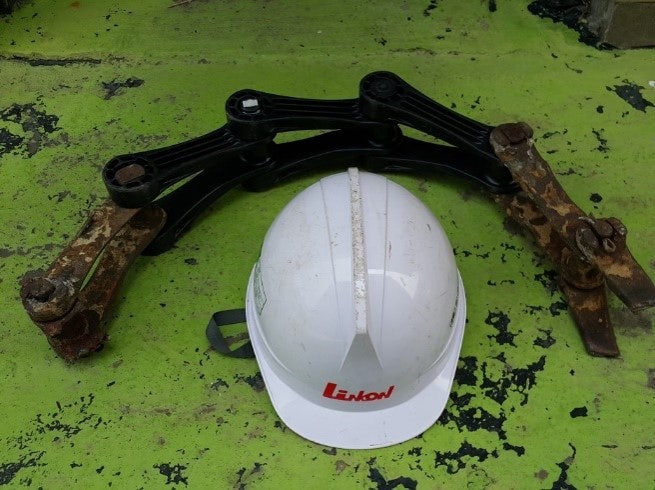
Non-metal and metal chains
#Non-metallic sludge collector Today, we will share the results of performance verification and inspection to determine to what extent the driving force is appropriate.
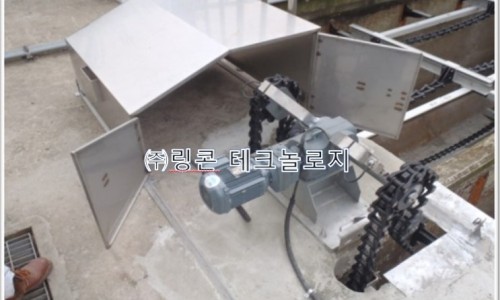
#non-metal Almost all sludge collector products are #composite material and #Engineering made of plastic #Chainflight type This is a sludge collector.
The change of metal chain to bar metal chain is
There was a change from using cast chains, stainless steel chains, and preservative-treated wood to composite materials and non-metals.
When using a metal chain, a basic power of 1.5 kW was required, and this is because more power was needed to operate the chain and flights than power to transport the sludge. Even now, the power of this specification still remains in various places, so how much power is appropriate for a non-metallic sludge collector? We hope that this will be helpful in selecting an eco-friendly sludge collector through energy savings by using appropriate power based on analysis and calculations through actual certified inspections and power analyzers.
The power and actual operating power of each existing sedimentation pond were scientifically analyzed using a power analyzer (HIOKI) for large-sized sedimentation ponds in Seoul and Busan and medium-sized sedimentation ponds in local areas.
|
model name |
Settling tank width X Depth (m) |
field name |
operating power (Kw) |
power consumption (Kw) |
Removal efficiency (%) |
|
LKSC-03520040 |
3.5 |
Pocheon-si, Gyeonggi-do |
0.75 |
0.13 |
- |
|
LKSC-03530040 |
3.5 |
Pocheon-si, Gyeonggi-do |
0.75 |
0.19 |
99.5% |
|
LKSC-03545040 |
3.5 |
Busan Metropolitan City |
0.75 |
0.17 |
- |
|
LKSC-03560040 |
3.5 |
Busan Metropolitan City |
0.75 |
0.34 |
99.0% |
|
LKSC-05520040 |
5.5 |
Pocheon-si, Gyeonggi-do |
0.75 |
0.22 |
- |
|
LKSC-05545040 |
5.5 |
Busan Metropolitan City |
0.75 |
0.26 |
over 90 |
|
LKSC-05565040 |
5.5 |
Busan Metropolitan City |
0.75 |
0.25 |
93.8% |

In this certified inspection #Sludge collector Removal efficiency means that the influent water coming from the inlet of the sedimentation tank is constant in the sedimentation tank.
This is the result of measuring the effluent discharged through the weir after retention time. This is the result of measuring only the final sedimentation basin and not the initial settling basin.
#Sludge removal efficiency than that determined in the sludge collector. When designing a sedimentation pond #stay time and #surface It is determined by the load.
Among sludge collector questions, sometimes " #Sludge collector efficiency How much does this cost? "There are times when a question is asked.
The performance of a sedimentation pond depends on the length of the sedimentation pond rather than its mechanical properties and performance. #staying time, When selecting a sedimentation pond #on surface load Efficiency can be judged based on the difference in water quality between inflow and discharge water.
#collector's When it comes to performance, in the case of a water purification plant, all parts are #4Popular metal Does it not leach out?", in the case of a sewage treatment plant or wastewater treatment plant, "#is it not decomposed by hydrogen sulfide or corrosive gas?", as in the case of a primary sedimentation tank, "no sand or #Abrasive substances How long can it last?", "#How long is the durability?", "#How cheap is the maintenance cost?"
Rincon Technology's non-metal collector is the only product in Korea in which the four major metals do not leach out (KTC certified report).
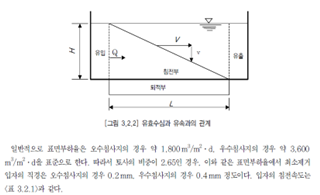
Sedimentation time of sludge particles
#Sludge removal efficiency
According to the Ministry of Construction and Transportation's "Sewage Facility Standards," the final settling basin is more than 90%, and according to the Ministry of Environment (1998) and the "Sewage Facility Standards," it is the surface load and sedimentation speed of the water rather than determining the efficiency of the machine. The purpose of the sludge collector is to transport it to the hopper in the best condition and return or remove it. Another thing is that it must be configured so as not to disturb the stream line in the settling tank.
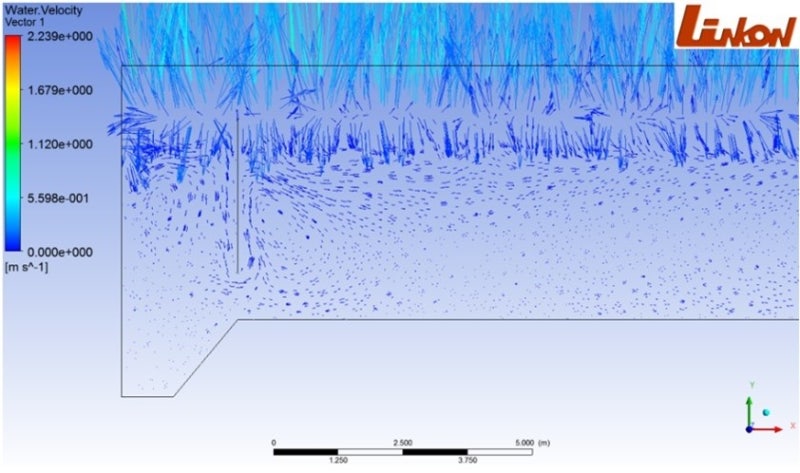
Flow analysis results when installing a membrane in the sedimentation tank
This is a situation that also appears in fluid analysis, in the middle of the settling basin.
various #Beple or #Sludge filtration membrane You can see that installing it has the opposite effect.
In the case of slow gravity sedimentation, this means that disturbing the stream line can reversely cause bulking of the sedimented sludge.
In the end, the function of the sludge collector is not to improve sludge removal efficiency, but to how highly active the settled sludge is transferred to the hopper without allowing it to settle. And is it highly durable against the inflow of sand or highly abrasive substances like the initial sedimentation pond? The question is whether it can sufficiently withstand hydrogen sulfide or highly decomposable gases and be used for a long period of time.
Another sedimentation site, Gangwon-do 00 treatment plant, was analyzed.
This was an independent analysis, and power analysis and insulation were checked using the power analyzer “Clamp on Power logger PW3360-21” and INSULATION TESTER IR40451-10. This is a facility that has been in operation for a minimum operating period of nearly 20 years.
I believe that a comparative analysis is needed not only of recently replaced and newly constructed facilities analyzed previously, but also of facilities that have been in operation for nearly 20 years.
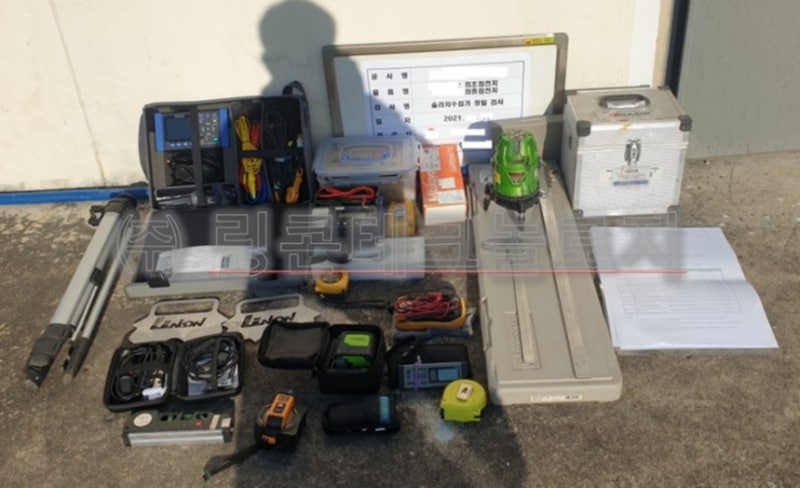
Sludge collector precision analysis equipment
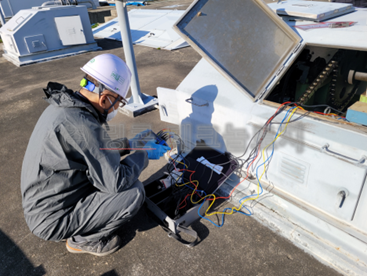
Sludge collector power analysis
Looking at the analysis graph,
Due to the aging of the equipment due to long-term operation, the sedimentation pond was shorter than previously analyzed, but the power consumption was somewhat higher.
Among them, during initial operation, the starting load can be seen to rise to a maximum of 0.5Kw, but this is believed to be caused by the rapid restart of the sedimentation pond after stopping for about 4 hours.
However, in general, power consumption was low.
|
model name |
Settling tank width X Depth (m) |
field name |
operating power (Kw) |
power consumption (Kw) |
Removal efficiency (%) |
|
LKSC-03520040 |
2.2 |
Gangwon-do |
0.75 |
0.23 |
- |
|
LKSC-03530040 |
2.2 |
Gangwon-do |
0.75 |
0.25 |
- |
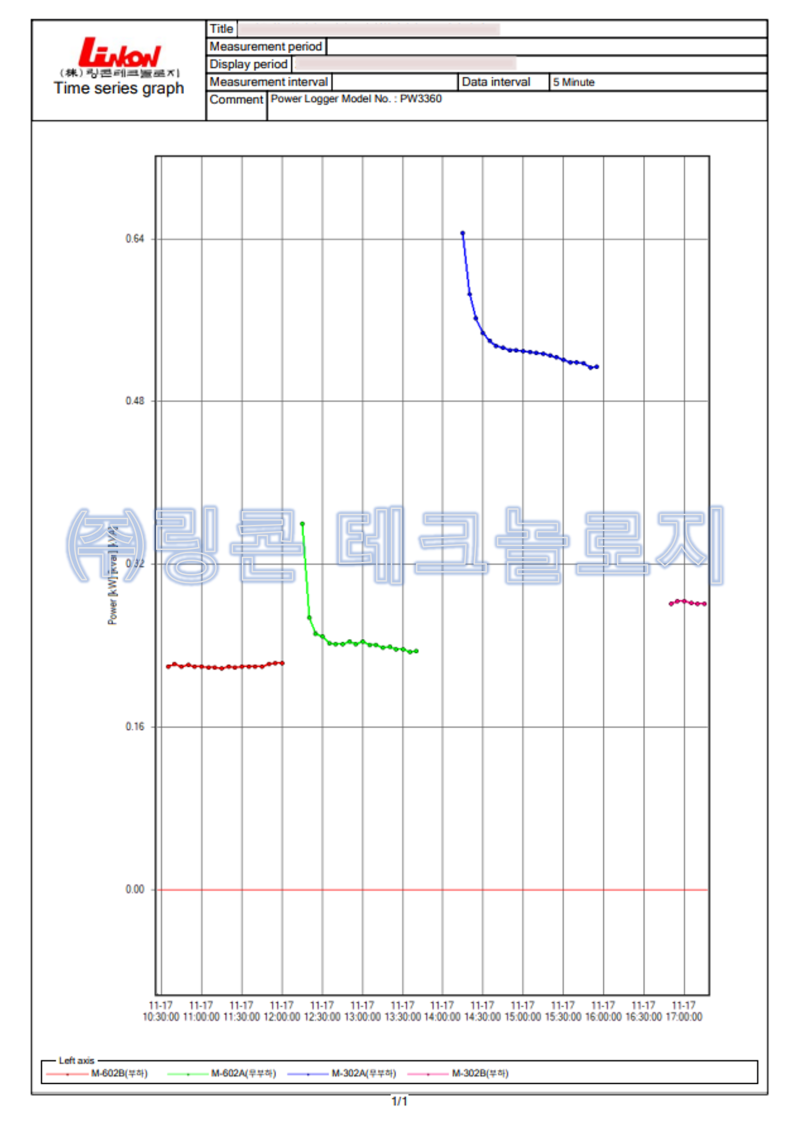
Sludge collector power consumption graph
Overall, the power was found to be sufficient even though it was reduced by about 1/2 or 1/3 from the existing design value.
This is an example from overseas:
#World's largest sewage treatment plant (2.5 million tons/day) -Hong Kong #SCISTW - In the case of the 70m wide and 70m long charger, 0.55 Kw is used even with a flight height of 380mm as a rapid settling tank for iron oxide.
In this respect, 1.5Kw of power in domestic non-metallic sludge collectors can be considered excessive power consumption.
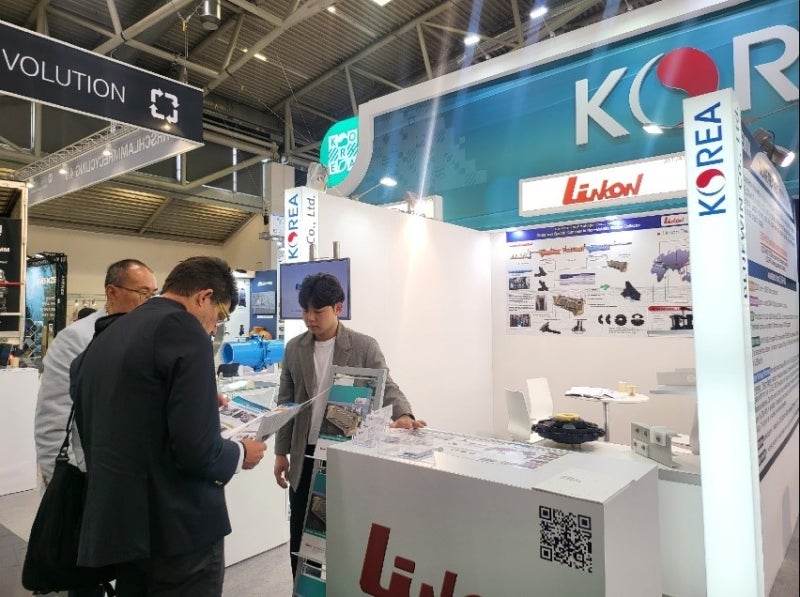
IFAT2022 LINKON exhibition hall in Munich
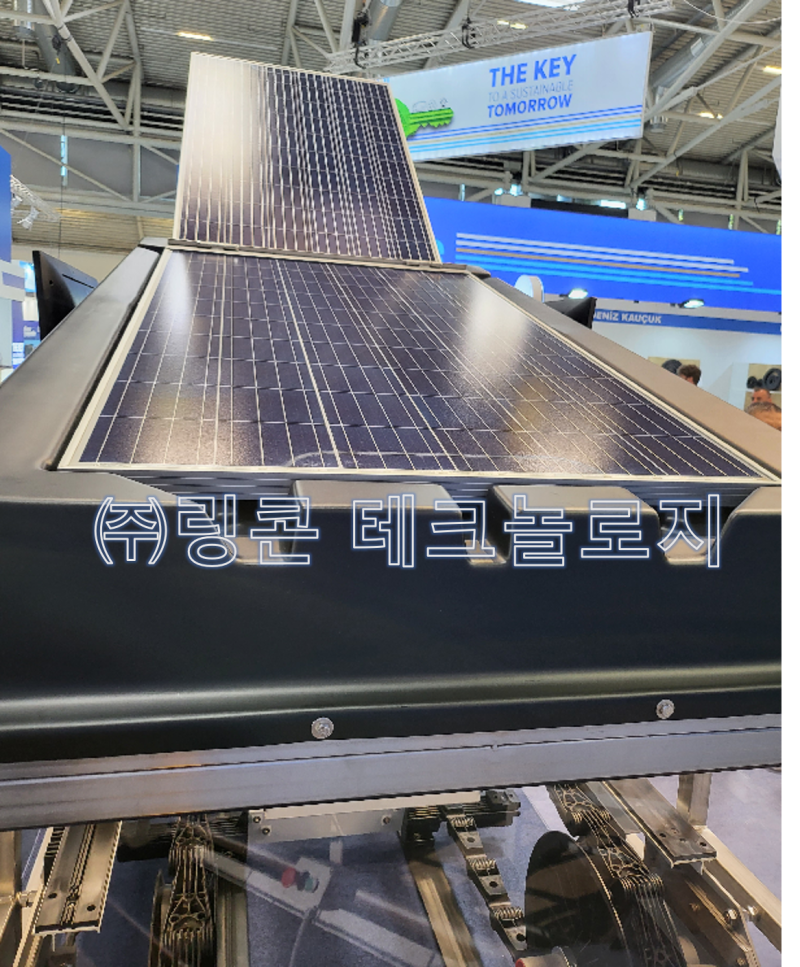
Collector power source using solar panels
And,
It is applied in an environmentally friendly manner in the operation of various non-metallic sludge collectors overseas.
this time #IFAT2022 #At the Munhen exhibition A method of operating the sludge collector using a solar panel on the sludge collector cover has also been introduced, but this has already been implemented. #HongKongDSD It was also a method applied in .
Here, if we simply calculate the SOLAR PANEL,
If the average daily use of 0.3kW is 24 hours, and the output loss and inverter loss are corrected, the average daily power generation is 10,800, and considering the total, 2200W is needed, which is about 400W*5.5.
It is not a size that can be simply completed with a collector cover.
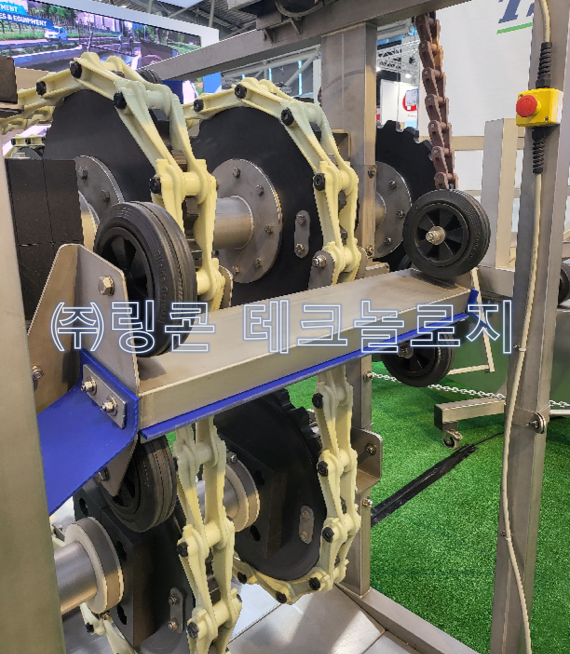
Another introduced technology is to attach wheels instead of SHOE to FLIGHT, Japanese patent “昭59-162915”.
-1984-, This is a technology disclosed in the US patent “US5056651-flight for collecting sludge by sweeping and roller shoe fixed thereto”-1991-.
These efforts were made in a way to reduce the weight load in METAL CHAIN or STS FLIGHT, but power reduction by applying the non-metallic sludge collector analyzed previously can be said to be an advancement in technology that operation using solar panels should be considered in the future.
In conclusion,
The method of attaching rollers or wheels to the flight or inserting balls into sleeve bearings only increases operating costs and defects in the long run, and does not significantly change power.
The conclusion of the inspection is that in non-metallic sludge collectors, over 0.55~0.75 Kw is an overcurrent power.
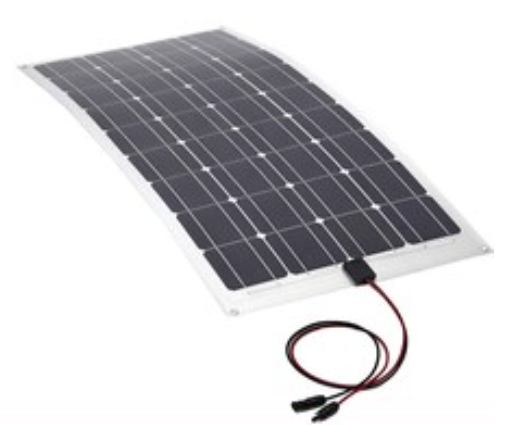
100W class solar module
★Related materials
Sludge collector specifications: Naver blog (naver.com)